

 English
 中文简体
中文简体Content
- 1 Which Outdoor Sofa Set Should You Buy?
- 2 Comparing Outdoor Sofa Materials
- 3 Understanding Outdoor Sofa Styles and Configurations
- 4 Sizing Your Outdoor Sofa Set to Your Space
- 5 Cushions and Fabric Considerations
- 6 Weather Resistance: What to Check Before Buying
- 7 Budget Ranges and What You Get at Each Price Point
- 8 Maintenance Tips to Extend the Life of Your Set
- 9 Final Takeaway
Which Outdoor Sofa Set Should You Buy?
For most homeowners, a synthetic rattan sofa set with an aluminum frame in an L-shape or modular corner configuration delivers the best overall value—it withstands rain and UV exposure without rotting or rusting, requires minimal maintenance, and adapts to almost any patio layout. If budget is the primary concern, a basic outdoor couch set in polyethylene wicker over a steel frame is a solid entry point, while those seeking a premium, natural look may prefer FSC-certified teak with weather-resistant cushions.
The right choice ultimately depends on three factors: your climate (humidity, sun exposure, rainfall), your available space (small balcony vs. large garden), and how much maintenance you're willing to do each season. The sections below break down exactly how to evaluate each of these factors before making a purchase.
Comparing Outdoor Sofa Materials
Material choice is the single biggest factor affecting how long your garden sofa set will last and how much upkeep it requires. The four most common materials used in outdoor wicker sofa and sectional construction each have distinct strengths and weaknesses.
Synthetic Rattan (PE Wicker)
Rattan garden furniture made from synthetic, UV-stabilized polyethylene (PE) is by far the most popular material for modern outdoor sectionals. Unlike natural rattan, it doesn't crack, fade significantly, or degrade when left outdoors year-round, and a quality PE rattan sofa set can last 15–20 years with minimal care.
Aluminum Frames
Aluminum is the preferred frame material for most outdoor sectional couch products because it's lightweight, rust-proof, and doesn't require repainting or sealing. Powder-coated aluminum frames resist chipping and scratching far better than untreated metal, making them ideal as the structural base under rattan or wicker weave.
Teak and Other Hardwoods
Teak naturally contains oils that resist moisture and insects, making it one of the few solid woods genuinely suited to permanent outdoor use without a protective coating. A well-built teak corner garden sofa can last 25+ years, though it requires occasional oiling to maintain its golden color (left untreated, it naturally weathers to a silvery gray, which many owners prefer aesthetically).
Steel Frames
Steel is heavier and more stable than aluminum, making it a good choice for windy locations, but it requires a quality rust-resistant coating since untreated steel will corrode within a few seasons of outdoor exposure.
| Material | Lifespan | Maintenance | Relative Cost |
|---|---|---|---|
| Synthetic Rattan (PE) | 15–20 years | Low | Mid |
| Aluminum Frame | 20+ years | Very Low | Mid-High |
| Teak | 25+ years | Moderate (annual oiling optional) | High |
| Steel Frame | 10–15 years | Moderate (rust monitoring) | Low-Mid |
Understanding Outdoor Sofa Styles and Configurations
Beyond material, the layout of your outdoor sofa set determines how well it fits your space and how many people it can comfortably seat. Configuration should be chosen based on available floor space first, seating capacity second—a beautiful sectional that overwhelms a small patio creates more problems than it solves.
L-Shape Outdoor Sofas
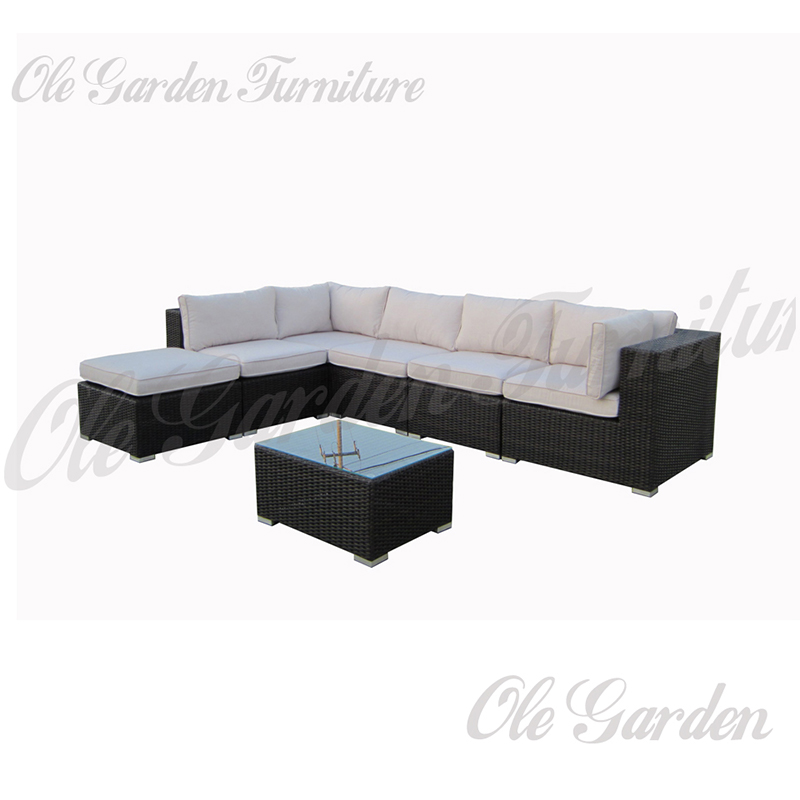
An l shape outdoor sofa is the most popular configuration for medium to large patios because it maximizes seating along two adjacent walls or corners while leaving the center of the space open for a coffee table or fire pit. This layout typically seats 5–7 people comfortably and works particularly well in rectangular or square outdoor areas.
Corner Sofa Sets
A corner outdoor sofa is similar to an L-shape but is specifically designed to nest into an actual architectural corner, such as where a patio meets a fence or wall. Corner garden furniture in this style is excellent for maximizing seating in smaller footprints since it uses otherwise underutilized corner space rather than floating in the middle of the patio.
Modular Sectionals
An outdoor sectional couch built from modular pieces allows you to rearrange individual sections into different configurations—L-shape, U-shape, straight line, or scattered individual seats—as your needs change. This flexibility makes modular sets a strong choice for renters or anyone who anticipates moving furniture between different outdoor spaces.
Straight (Sofa-Only) Sets
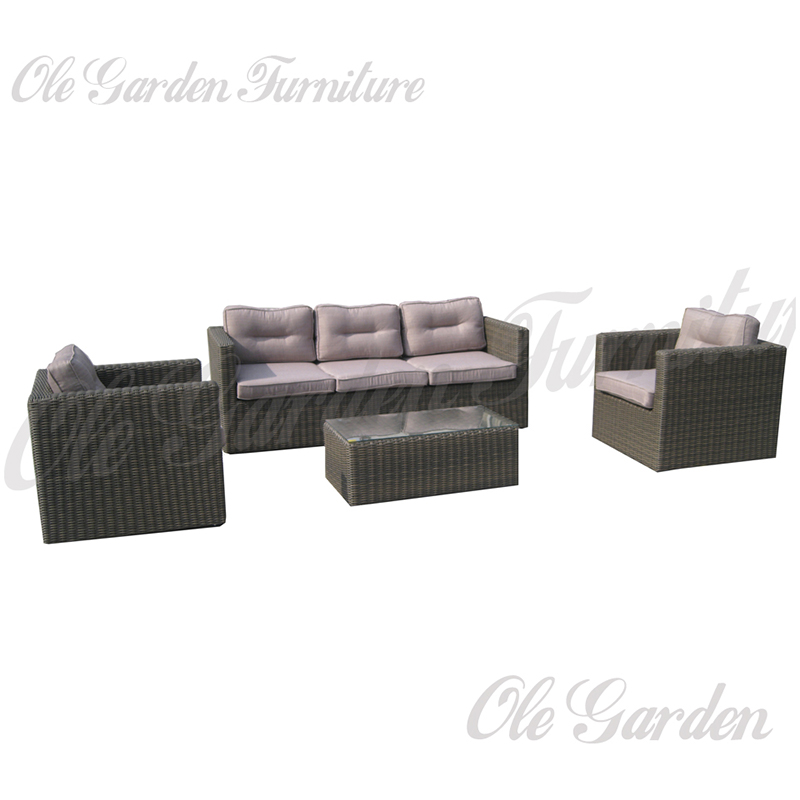
A simple straight outdoor patio couch paired with two armchairs and a coffee table remains a practical option for narrow balconies or smaller gardens where a wraparound sectional simply won't fit.
Sizing Your Outdoor Sofa Set to Your Space
Measuring before buying prevents the single most common outdoor furniture mistake: purchasing a set too large for the available space.
Step 1: Measure the Full Patio Footprint
Measure the length and width of your usable outdoor area, then subtract clearance space for walkways, doors, grills, or other fixed features. As a general rule, leave at least 30 inches (75 cm) of walking clearance around any seating arrangement.
Step 2: Match Configuration to Footprint
| Patio Size | Recommended Configuration | Typical Seating |
|---|---|---|
| Small (under 80 sq ft) | 2-seater sofa + 1 chair, or compact corner set | 2–4 people |
| Medium (80–150 sq ft) | L-shape sectional or corner garden sofa | 5–6 people |
| Large (150+ sq ft) | Modular sectional or U-shape configuration | 7–10+ people |
Step 3: Test the Layout Before Purchasing
Use painter's tape, rope, or cardboard cutouts on your actual patio to outline the footprint of the outdoor couch set you're considering. This low-tech step catches sizing mistakes before they become an expensive returns process.
Cushions and Fabric Considerations
Even the best frame and weave won't deliver comfort without the right cushions. Outdoor cushion fabric should always be solution-dyed acrylic or olefin, not standard indoor upholstery fabric, since these materials resist fading, mold, and water absorption far better than cotton or polyester blends.
Foam Fill Quality
Quick-dry foam with an open-cell structure allows water to drain through rather than being absorbed, which prevents mold growth and reduces drying time after rain. Standard closed-cell foam retains moisture and can develop mildew within a single rainy season.
Removable, Washable Covers
Look for cushion covers with zippers that allow removal for washing or storage, rather than fixed covers that trap dirt and require spot-cleaning only.
Weather Resistance: What to Check Before Buying
Not all products marketed as "outdoor" are built for the same conditions. Before buying any rattan garden sofa or wicker sofa set, confirm these three weather-resistance details directly with the seller.
UV Stabilization of the Weave
Quality synthetic rattan includes UV stabilizers mixed directly into the PE resin, not just applied as a surface coating. Surface-only UV treatments wear off within 1–2 years, after which the weave becomes brittle and discolored under direct sun.
Frame Corrosion Resistance
For aluminum frames, confirm powder-coating rather than basic painted finishes. For steel frames, ask specifically about galvanization or rust-resistant primer layers, since these details are rarely visible in product photos.
Drainage Design
Quality outdoor sectional couch frames include small drainage gaps or holes at the base of seating sections, allowing rainwater that pools inside the frame to escape rather than sitting and accelerating corrosion or mold growth.
Budget Ranges and What You Get at Each Price Point
Outdoor sofa sets span an enormous price range, and understanding what differentiates each tier helps avoid both overpaying and under-buying.
- Entry-level ($300–$800): Basic PE wicker over steel frames, thinner cushions, limited modularity—suitable for occasional use or starter patios.
- Mid-range ($800–$2,000): Quality rattan sofa set construction with aluminum frames, quick-dry foam cushions, and modular configurations—the sweet spot for most households.
- Premium ($2,000+): Teak or high-grade aluminum frames, designer fabric options, larger modular systems, and extended warranties (often 5+ years on frames).
Maintenance Tips to Extend the Life of Your Set
Proper care can significantly extend the usable life of any garden sofa set, regardless of material.
- Clean rattan and wicker weaves with mild soap and water every 4–6 weeks during heavy use seasons to prevent dirt buildup that can degrade the resin over time.
- Store or cover cushions during extended rain periods, even with quick-dry foam, to minimize repeated saturation cycles.
- Apply teak oil 1–2 times per year if you want to maintain the wood's original golden tone rather than letting it weather naturally.
- Inspect aluminum and steel frames annually for chips in the coating, and touch up promptly to prevent corrosion from spreading.
- Use furniture covers during winter or off-season storage to reduce UV and moisture exposure when the set isn't in regular use.
Final Takeaway
Choosing the right outdoor sofa set comes down to matching material durability, configuration, and cushion quality to your specific space and climate. For most patios, a synthetic rattan sofa set on an aluminum frame in an L-shape or modular corner layout offers the best combination of comfort, low maintenance, and long-term value, while teak remains the top choice for buyers prioritizing natural materials and willing to perform occasional upkeep. Measure your space carefully, verify UV stabilization and frame corrosion resistance before purchasing, and invest in quick-dry, solution-dyed cushions—these details matter far more to long-term satisfaction than style alone.