

 English
 中文简体
中文简体Content
- 1 Step 1: Choose a Frame Material Built for Your Climate
- 2 Step 2: Pick the Right Cushion Fabric and Fill
- 3 Step 3: Size the Sofa to Your Space
- 4 Step 4: Choose a Style That Fits Your Outdoor Aesthetic
- 5 Maintenance Routine for Year-Round Durability
- 6 Outdoor Sofa vs. Indoor Sofa: Why You Can't Use One for the Other
To choose an outdoor sofa that survives year-round exposure, prioritize a rust-proof frame (aluminum, teak, or HDPE resin wicker), quick-dry cushion foam wrapped in solution-dyed acrylic fabric, and a design sized to leave at least 30 inches of walking clearance around your seating area. Getting the frame and fabric right up front matters more than style, because these two components determine whether your sofa lasts 3 years or 15—regardless of how much it costs upfront.
Below, we walk through exactly how to evaluate frame materials, cushion fabrics, sizing, style options, and the maintenance routine that keeps an outdoor sofa looking new through every season.
Step 1: Choose a Frame Material Built for Your Climate
The frame is the structural foundation of an outdoor sofa, and it's the component most likely to fail if the wrong material is chosen for your environment. Humid, coastal, or freeze-thaw climates require materials that resist rust, rot, and cracking—not just water repellency on the surface.
Aluminum
Powder-coated aluminum is lightweight, rust-proof, and one of the lowest-maintenance frame options available. It performs especially well in coastal areas where salt air corrodes steel and iron over time.
Teak and Other Hardwoods
Teak contains natural oils that make it resistant to rot, insects, and moisture without any sealing, allowing it to last 25+ years even when left outdoors uncovered year-round. Left untreated, it weathers to a silvery-gray patina; treated with teak oil annually, it retains its warm honey-brown color.
HDPE Resin Wicker
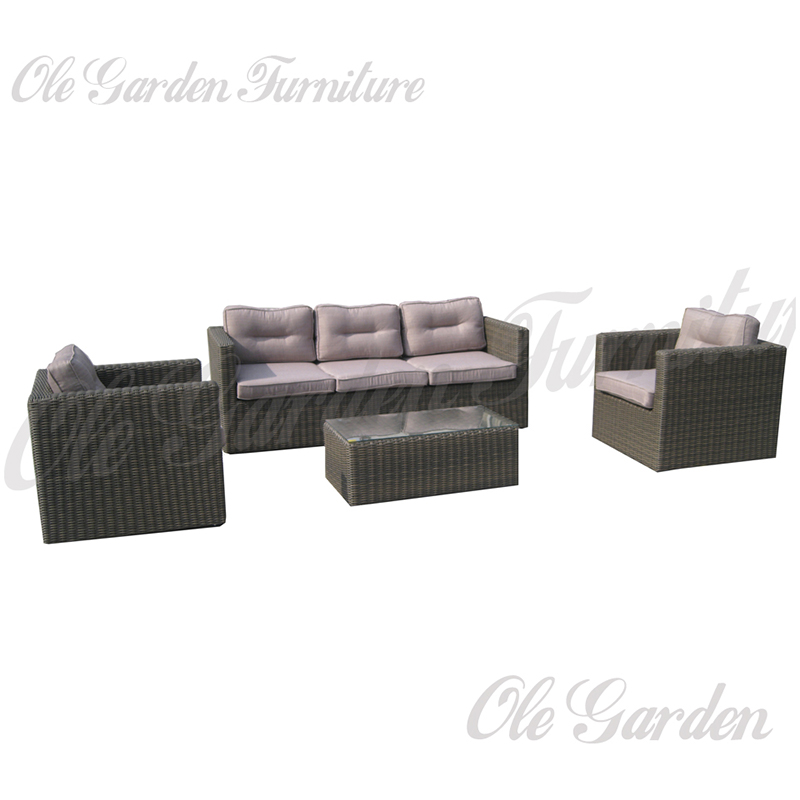
Synthetic resin wicker is woven around an aluminum or steel frame and is engineered to resist UV fading, cracking, and moisture absorption—unlike natural rattan, which deteriorates quickly outdoors.
Steel and Wrought Iron
Steel frames offer excellent strength and wind resistance, making them a good choice for open, exposed patios, but they require a quality powder coat or galvanization to prevent rust—untreated steel can corrode within a single rainy season.
| Material | Weather Resistance | Maintenance | Expected Lifespan |
|---|---|---|---|
| Aluminum | Excellent | Very Low | 15–20 years |
| Teak | Excellent | Low (optional oiling) | 25+ years |
| HDPE Resin Wicker | Very Good | Low | 10–15 years |
| Steel/Iron | Fair (needs coating) | Moderate | 8–12 years |
Step 2: Pick the Right Cushion Fabric and Fill
Cushions fail faster than frames on most outdoor sofas, so fabric and fill choice deserve just as much attention as the frame material.
Solution-Dyed Acrylic Fabric
Unlike fabrics that are dyed on the surface, solution-dyed acrylic has color woven into the fiber itself, so it resists fading even after years of direct sun exposure—brands like Sunbrella back their fabrics with 5–10 year fade warranties. It's also mold- and mildew-resistant, making it the industry standard for outdoor cushions.
Quick-Dry Foam
Look for cushions filled with open-cell quick-dry foam rather than standard indoor foam. Quick-dry foam allows water to pass through and drain instead of being absorbed, preventing the moldy smell and sogginess common with lower-quality cushions after rain.
Fabric to Avoid
Avoid printed polyester or cotton-blend cushions marketed as "outdoor" at a steep discount—these typically fade within a single season and absorb moisture rather than repelling it.
Step 3: Size the Sofa to Your Space
A good rule of thumb is to leave at least 30 inches of walking clearance around any outdoor sofa, and 14–18 inches between the sofa and a coffee table for comfortable leg room.
- Loveseat (2-seater) – Roughly 50–60 inches wide; ideal for small balconies or narrow patios
- Standard sofa (3-seater) – Roughly 74–84 inches wide; fits most mid-sized patios
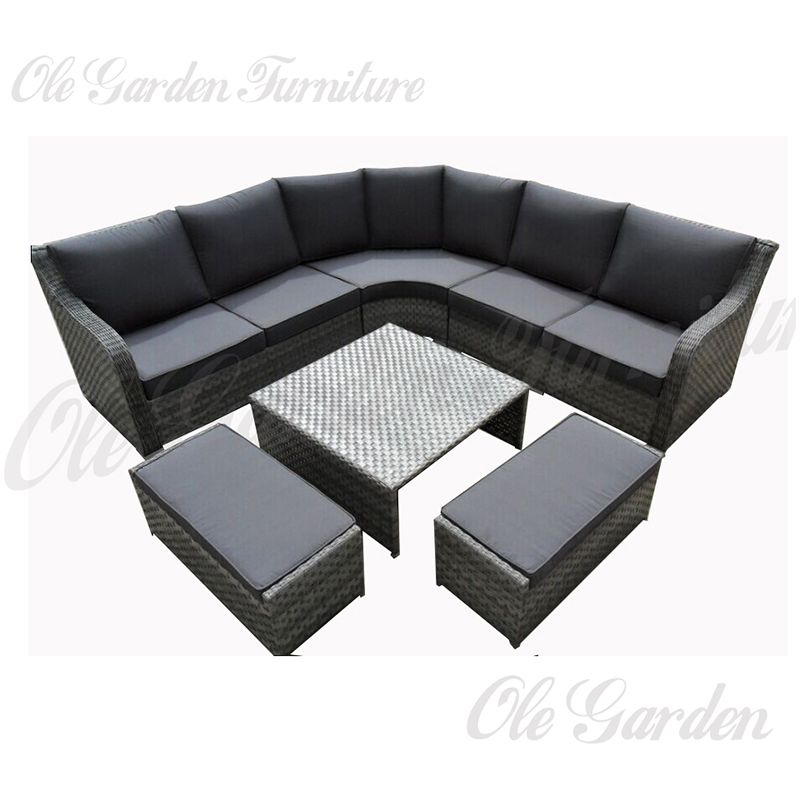
- Sectional – Modular and configurable; best for large decks or poolside lounge areas
Always measure your space before ordering, and mark out the sofa's footprint with tape on the ground to confirm it doesn't crowd walkways or doors.
Step 4: Choose a Style That Fits Your Outdoor Aesthetic
Once material and size are settled, style determines how the sofa integrates visually with your outdoor space.
Modern/Minimalist
Clean lines, low profiles, and neutral tones (typically aluminum or resin wicker frames) suit contemporary patios and rooftop spaces.
Coastal/Natural
Teak wood frames paired with light, neutral cushion fabrics create a relaxed, beach-house feel well-suited to gardens and poolside settings.
Traditional/Classic
Wrought iron frames with deep cushions and patterned fabrics suit covered porches and more formal outdoor living rooms.
Maintenance Routine for Year-Round Durability
Even the best materials need basic upkeep to reach their full lifespan. Following a simple seasonal routine can extend an outdoor sofa's usable life by 5–10 years compared to no maintenance at all.
- Wipe down frames monthly – Use mild soap and water to remove dust, pollen, and salt buildup before it accelerates wear.
- Rotate and fluff cushions weekly – Prevents uneven compression and moisture pooling on the underside.
- Store or cover cushions during heavy rain or winter – Even quick-dry foam benefits from reduced saturation cycles.
- Oil teak frames 1–2 times per year – Optional, but keeps the wood's original color instead of weathering to gray.
- Check hardware seasonally – Tighten bolts and screws, which can loosen from temperature fluctuations and repeated use.
Outdoor Sofa vs. Indoor Sofa: Why You Can't Use One for the Other
Indoor sofas use materials—untreated wood, standard foam, and non-UV-treated fabric—that are not engineered to handle sun, rain, or humidity, and will typically show mold, fading, or structural damage within a single season outdoors. Outdoor sofas are purpose-built with weather-resistant frames, quick-dry foam, and fade-resistant fabric specifically to withstand these conditions.
| Factor | Outdoor Sofa | Indoor Sofa |
|---|---|---|
| Frame Treatment | Rust/rot-resistant coating | None required |
| Cushion Foam | Quick-dry, open-cell | Standard, absorbent |
| Fabric Fade Resistance | High (solution-dyed) | Low |