

 English
 中文简体
中文简体Content
You are standing in a showroom, comparing two outdoor dining sets that look almost identical at a glance. One is marked as acacia, the other as teak, and the teak set costs roughly twice as much. As a manufacturer that supplies outdoor furniture to buyers in different climates, we hear this comparison all the time. The short version is: teak is the more durable, lower-maintenance wood and will last decades, while acacia is a budget-friendly hardwood that can still serve you well if you keep it protected and re-seal it on schedule. This guide breaks down the differences across durability, maintenance, appearance, and price so you can decide which wood truly fits your patio and your wallet.
The Short Answer: Teak Lasts Longer, Acacia Costs Less
If you want furniture that stays outside through rain, snow, frost, and salt air for 25 years or more, teak is the clear winner. Acacia will typically give you 5 to 10 years of outdoor service, and that estimate assumes regular sealing or oiling. Under a covered patio or in a dry climate, acacia can last a bit longer, but it still needs more attention than teak.
The reason lies in the wood's chemistry. Teak is rich in natural oils that repel water and insects, and its tight grain structure resists cracking. Acacia contains some oils, but not enough to handle prolonged exposure to the elements on its own. That difference drives every other comparison: longevity, maintenance, and total cost over time.
Acacia Wood: What You Should Know
Acacia is a fast-growing hardwood from tropical regions, and it has become popular for outdoor furniture because it is affordable and visually warm. The wood has a golden-brown color with dark grain streaks, and when newly finished it looks rich and inviting. Many budget-conscious buyers choose acacia exactly because it delivers a real wood exterior without the premium price tag.
Pros of Acacia
- Lower upfront price than teak
- Dense and reasonably hard, so it resists scratches and dents fairly well
- Attractive natural wood appearance
Cons of Acacia
- Less natural oil than teak, so it absorbs moisture and UV rays more easily
- Prone to cracking, splitting, and warping if left unprotected
- Needs regular sealing, oiling, or covering
- Turns gray and rough when neglected
In our production experience, acacia is used most often for indoor furniture or for outdoor spaces that are protected by a roof, awning, or large umbrella. It can work on an open patio if you are prepared to re-seal it every season, but it is not a set-and-forget material. People who choose acacia need to understand that the money saved upfront is partly offset by the time and cost of maintenance.
Teak Wood: The Gold Standard for Outdoor Furniture
Teak is a slow-growing tropical hardwood famous for its weather resistance. It has been used for decades on boat decks and in outdoor construction for one simple reason: it does not rot easily. The wood contains high levels of natural rubber, oil, and silica, which make it highly resistant to water, insects, and decay. This is why teak is regarded as the premium material for outdoor furniture.
Pros of Teak
- Outstanding resistance to rain, sun, frost, and salt air
- Low maintenance; can be left outside without any finish
- Long lifespan, often 25 to 50 years or more with minimal care
- Develops a stable silver-gray patina while keeping its structural strength
Cons of Teak
- Significantly more expensive than acacia
- If you prefer the original golden color, you need to clean and oil it periodically
- Lower grades may contain less heartwood and offer weaker durability
When buying teak, grade matters. Grade A teak comes from the center of the log and contains the highest oil content. Lower grades include more sapwood, which is softer and less weather-resistant. A cheap "teak" table may actually be made with low-grade wood that behaves more like acacia. Always ask your supplier about the grade before you assume you are getting the full durability of teak.
Acacia vs Teak: Side-by-Side Comparison
| Factor | Acacia | Teak |
|---|---|---|
| Weather resistance | Good under cover; fades and cracks in full sun and rain | Excellent in sun, rain, frost, and salt air |
| Typical lifespan | 5-10 years outside with maintenance | 25-50 years with minimal care |
| Maintenance | Regular oiling or sealing required | Occasional cleaning; oiling optional for color |
| Janka hardness | Comparable range to teak; resists dents | Comparable range; good scratch resistance |
| Appearance | Golden-brown with dark streaks | Golden-brown to darker brown; ages to silver gray |
| Price | Budget-friendly | Premium price |
Hardness is not the main deciding factor here. Both acacia and teak are hardwoods in a similar range. The real differences are oil content, grain density, and long-term performance outdoors. In dry, shaded environments, acacia can look almost as good as teak for several seasons. In open sun and heavy rain, the gap becomes obvious within a year or two.
If you keep your furniture under a pergola or another cover, you can reduce weathering for both species. Covered conditions slow down moisture absorption and UV damage, which helps acacia close part of the gap with teak. But covering will not make acacia as maintenance-free as teak.
Which Should You Choose?
Your answer depends on three things: climate, budget, and how much maintenance you want to do. There is no universal best, but there is a best for each situation.
Coastal or harsh climates: Teak is the safer choice. Its natural oils protect against salt and moisture, so it will survive years of beachfront exposure without structural damage. Acacia in the same environment will likely check, crack, and fade within a few seasons. If you live within a mile of the ocean, treat teak as the default option.
Covered patio or mild climate: Acacia can be a sensible way to get a natural wood look without spending a fortune. Keep it covered, re-oil it once or twice a year, and it will serve you reasonably well. If you prefer a low-maintenance option, look at materials that do not need finishing. Many of our customers choose powder-coated aluminum or woven rattan because they are sturdier outdoors than acacia and much easier to care for. Our woven rattan outdoor sofa sets match the warmth of wood while never requiring oiling.
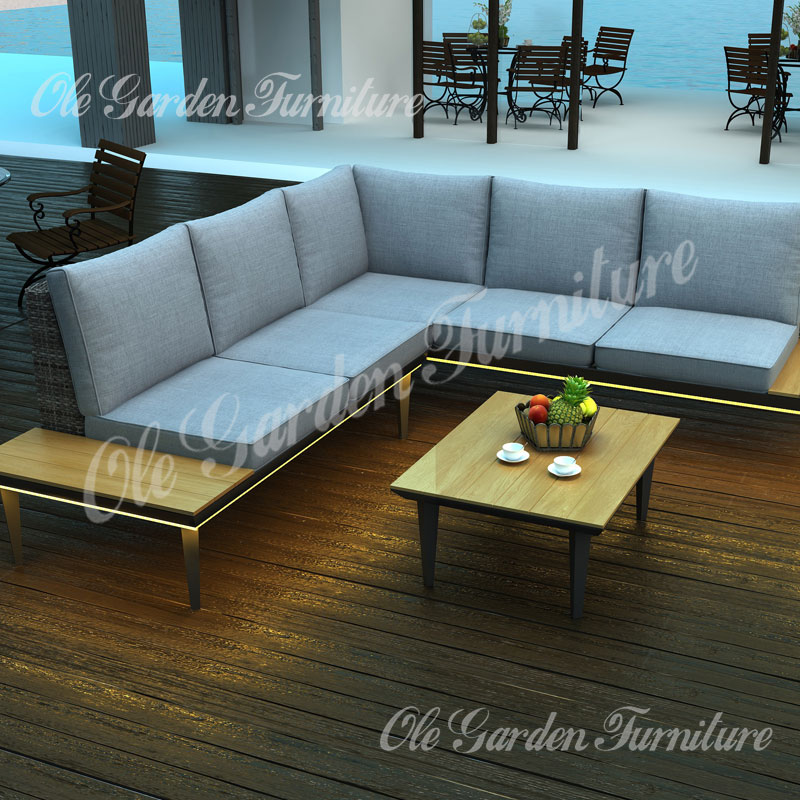 Wholesale ALSET 3146 VIVIENNE 3pcs outdoor sofa sets with woven rattan backrest Shaoxing OLE Leisure Products Co., Ltd. is China wholesale ALSET 3146 VIVIENNE 3pcs outdoor sofa sets with woven rattan backrest Manufact...View Product →
For outdoor dining, a five-piece round outdoor dining set with a coated metal frame gives you a weather-ready table and chairs at a practical price point. It does not have the textured grain of real wood, but it avoids the annual sealing routine that acacia requires and the high initial cost of teak.
 Wholesale YL-101 5 Piece Round Outdoor Dining Table and Chair Set Manufacturers,Shaoxing OLE Leisure Products Co., Ltd. is China wholesale YL-101 5 Piece Round Outdoor Dining Table and Chair Set Manufacturers and Fac...View Product →
Long-term value: If you calculate total cost over 20 years, teak usually wins despite its high upfront price because it will not need replacement. Acacia may need to be replaced after a decade, which can negate the initial savings. For a commercial project or a rental property where furniture has to survive heavy use, teak is the more dependable investment.
For general care tips, see our guide on outdoor lounge chair maintenance. The cleaning and storage principles in that guide apply to most outdoor furniture, regardless of material.
The practical answer is simple: choose teak if you want the longest outdoor service life and the least upkeep; choose acacia if you have a stricter budget and are willing to reseal the wood regularly. If neither wood feels right, remember that alternative materials can deliver the same function with less work. Match the furniture to the conditions you actually have, and it will last far longer.