

 English
 中文简体
Content
- 1 The Short Answer: Teak vs Eucalyptus at a Glance
- 2 Hardness, Density, and How Each Wood Behaves
- 3 Moisture, Rot, and Long-Term Weathering
- 4 Colour, Grain, and the Look of Your Patio
- 5 Cost and Maintenance Over the Years
- 6 Which Wood Fits Your Project?
- 7 What About Pergolas and Shade Structures?
- 8 If You Would Rather Skip the Yearly Oiling
Every week, someone writes to us with the same question: eucalyptus or teak for outdoor furniture? Both woods end up on patios, both fade to silver-grey after a few seasons, and both cost real money, so the choice deserves more than a slogan.
We are a manufacturer based in Shaoxing, China, building outdoor furniture in aluminium, iron, woven rattan, stone, and glass, and we also work with buyers who bring their own timber designs to us. That gives us a fairly practical view of this debate. The honest answer is that neither wood wins outright. What matters is how much sun and rain the piece will face, how heavy the use will be, and how much maintenance the owner is willing to take on every year.
The Short Answer: Teak vs Eucalyptus at a Glance
Teak is the more forgiving wood. It carries natural oils and rubber compounds that slow rot, repel insects, and shrug off moisture, which is why a teak bench can be left outdoors for years with almost no attention. Eucalyptus, in most of the species used for garden furniture, is denser and harder, and it usually costs noticeably less. That density has a downside: the timber moves more as humidity rises and falls, so it needs oiling or sealing to stay flat and crack-free.
The table below gathers the differences buyers ask about most often.
| Property | Teak | Eucalyptus |
|---|---|---|
| Janka hardness (approx.) | 1,000-1,150 lbf | 1,000-1,500 lbf, species dependent |
| Density | About 40-45 lb per cubic foot | About 45-55 lb per cubic foot |
| Natural oil content | High | Low |
| Rot resistance when untreated | Very high | Moderate |
| Colour when new | Golden honey brown | Pinkish to reddish brown |
| Weathered colour | Even silver-grey | Silver-grey with more variation |
| Movement and cracking | Low to moderate | Moderate to high |
| Typical care | Oiling optional | Oil or seal once or twice a year |
| Relative price | Higher | Lower |
Hardness, Density, and How Each Wood Behaves
On paper, many of the eucalyptus species used for garden furniture test as hard as, or harder than, teak. A denser surface resists dents and scratches, and heavy chairs and tables feel solid. Hardness alone, though, does not decide how a piece ages outdoors. Teak's advantage is chemical: the oils and extractives inside the wood make it unpleasant for fungi and insects, and they slow the movement of water through the grain.
Eucalyptus has far less of that natural protection. It also tends to have interlocked grain, so it can tear or fuzz during machining if the tooling is dull, and it moves more when moisture changes. That is why drying matters so much. Kiln-dried eucalyptus with sealed end grain behaves very differently from cheap stock that was air-dried and rushed into a container.
From our side of the factory floor, eucalyptus rewards discipline: sharp cutters, controlled drying, stainless fasteners, and a finish applied before the furniture reaches a customer's garden. Teak is more forgiving of shortcuts, and that is part of what you pay for.
Moisture, Rot, and Long-Term Weathering
Put both woods in a wet, shaded corner and the gap becomes obvious. Teak is rated among the most durable timbers in the world and handles decades of rain, provided water drains away and air can circulate. Eucalyptus sits in the middle of the durability scale. Left bare, it absorbs water, swells, checks along the grain, and eventually rots where moisture sits, especially at joints and end grain.
Fasteners deserve a mention too. Both woods contain acids and extractives that attack ordinary steel, so stainless steel or hot-dip galvanised hardware is a requirement, not an upgrade.
One thing the two woods share is how they age. Without oil, both fade to a soft silver-grey. Many owners like that look and stop treating the furniture altogether, while others prefer the warm original tone and keep up a finishing routine.
Colour, Grain, and the Look of Your Patio
New teak is a warm golden brown with a fine, even grain and very little colour variation between boards. It is one reason teak became the default choice for high-end decks and dining tables: a set looks calm and consistent.
Eucalyptus arrives with more character. The heartwood is pinkish to reddish brown, the grain is often more dramatic, and boards can differ from one another in tone. If you like a warmer, rustic feel, that variation works in your favour. If you want a set that reads as one piece, expect to sort boards or rely on a tinted finish.
Cost and Maintenance Over the Years
Eucalyptus almost always wins on the invoice, often by a wide margin, which is the main reason it appears in so many garden dining sets. Teak costs more because it grows slowly and because the wood does much of the protective work by itself.
The longer view is more balanced. A eucalyptus set that is oiled once or twice a year, and cleaned before each treatment, holds up well for many seasons. Skip that routine and the wood will still stand, but it greys unevenly and may crack at the ends of boards. Teak can be left alone, though even teak benefits from an occasional clean. The same logic applies to seating in general, which is why we often point buyers to our notes on how to choose and care for an outdoor lounge chair before they settle on a material.
Which Wood Fits Your Project?
There is no universal winner, but the decision usually becomes simple once you know your conditions.
- Choose teak if the furniture will sit in full sun and heavy rain, if the climate is humid or coastal, if you want the lowest possible maintenance, and if the budget allows for a premium material.
- Choose eucalyptus if you are furnishing a large space on a fixed budget, if the set will live under a roof, pergola, or awning, and if you are willing to oil or seal it once or twice a year.
- Reconsider wood altogether if the furniture will be moved often, stored in a damp shed, or used in a commercial setting where nobody will look after it.
Whichever way you go, insist on kiln-dried timber, sealed end grain, stainless hardware, and a design that lets water run off rather than collect in joints.
What About Pergolas and Shade Structures?
Timber pergolas follow the same logic. A teak or eucalyptus frame looks beautiful, but the beams and posts are the parts that stay wet longest, so rot resistance matters even more here than on a tabletop. If the structure is fixed and the owner wants zero maintenance, aluminium louvered pergolas have become the more practical answer: adjustable slats for sun and airflow, no oiling, no cracking, and a lifespan measured in decades rather than seasons.
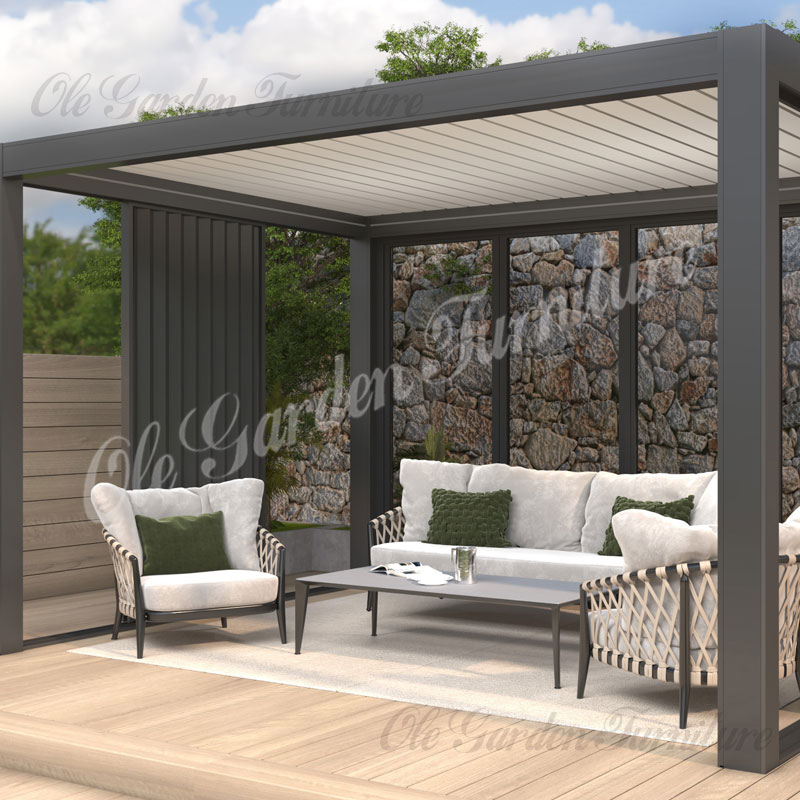 LUCAS GOL-44110 Electric Louvered All-Weather Outdoor PergolaElectric adjustable louvers, weather-resistant construction and all-weather comfort suit courtyards, gardens or terraces where a low-maintenance sheltered outdoor space is needed.View Product →
If You Would Rather Skip the Yearly Oiling
Not every buyer wants a maintenance calendar attached to their garden. Aluminium and iron frames with powder coating, woven rattan seating, and stone or glass tabletops all handle rain and sun without a drop of oil. They also hold their colour, which matters for rental properties and for anyone who simply prefers a modern look beside a wooden deck.
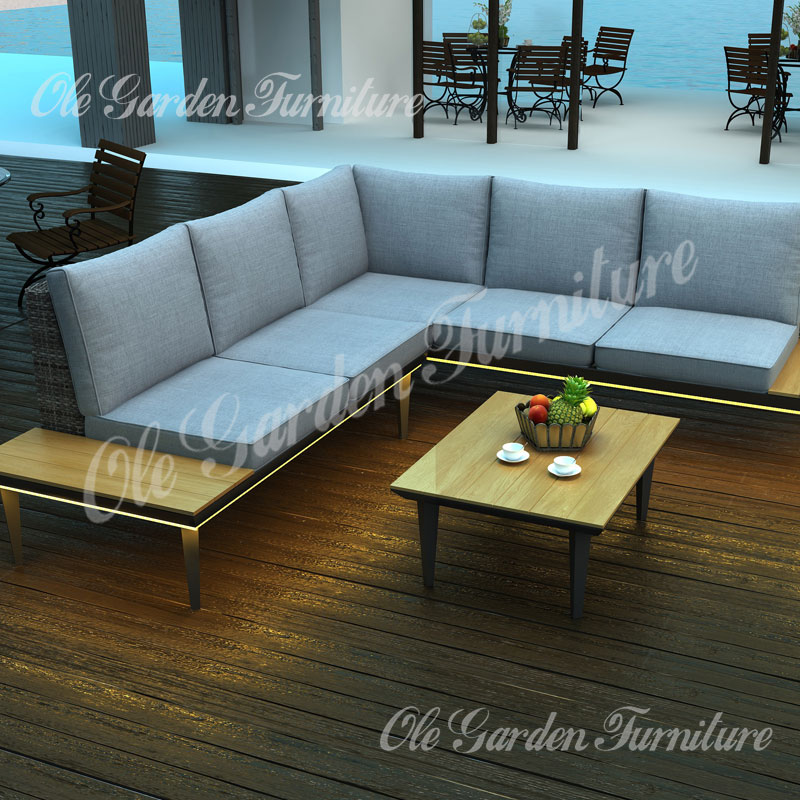 ALSET 3146 VIVIENNE 3-Piece Outdoor Sofa Set with Woven Rattan BackrestModular L-shaped sofa and dining table with corrosion-resistant frame and waterproof cushions offer low-maintenance comfort for courtyards, balconies or terraces.View Product →
Woven rattan is a good example. The frame underneath does the structural work, while the weave gives the warm, textured appearance people associate with timber, and a wipe with soapy water is the whole routine. Dining sets work the same way, and a rectangular table that seats eight or nine is often the piece that decides whether a patio actually gets used.
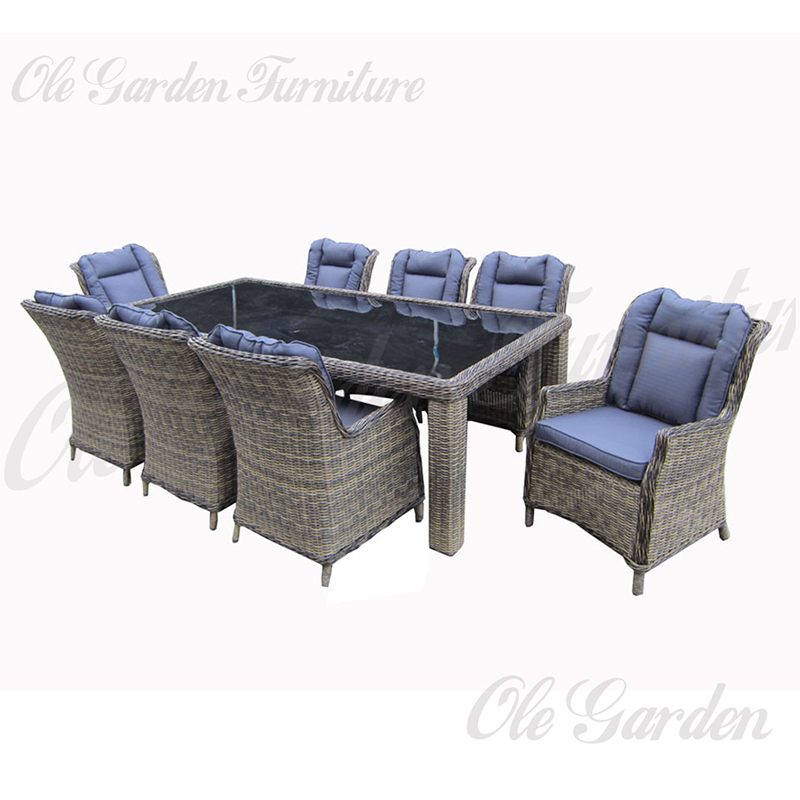 YL-105 9-Piece Rectangular Outdoor Dining Set with Rattan ChairsEight rattan chairs and a glass-topped table with parasol hole make this aluminum-frame set practical for family gatherings, parties or commercial outdoor dining.View Product →
If you are sourcing for a brand or a project, it helps to compare the options side by side rather than one material at a time.
So, eucalyptus or teak? If you want the wood that asks the least of you and the budget is there, teak is the safer long-term bet. If you want a dense, characterful timber at a friendlier price and you do not mind a yearly oiling, eucalyptus will serve you well for years.
If you would rather spend your weekends sitting on the furniture instead of treating it, we build alternatives in aluminium, iron, woven rattan, stone, and glass. You can browse our outdoor furniture range, or send your drawings and specifications to our sales team at jenny@yoolo.com, or call +86-15067563447. Either way, you will get a straight answer about which material suits the job, wood included.