

 English
 中文简体
Content
- 1 Why Outdoor Cushions Get Dirty Faster Than You Expect
- 2 Know Your Fabric Before You Apply Anything
- 3 The Cleaning Kit That Actually Does the Job
- 4 Use This, Skip That
- 5 Step-by-Step: How to Clean Outdoor Cushions
- 6 Mildew, Mold, and the Damp Smell in the Seams
- 7 A Stain-by-Stain Quick Reference
- 8 Drying: The Step Most People Rush
- 9 Hand Washing vs. Machine Washing Cushion Covers
- 10 Cushion Care Depends on What Is Underneath
- 11 Repair or Replace? Reading the Signs of a Tired Cushion
- 12 Prevention: Small Habits That Add Years
- 13 Putting Cushions Away for the Off-Season
- 14 Frequently Asked Questions
- 14.1 Can I put outdoor cushion covers in the washing machine?
- 14.2 Is it safe to use bleach on outdoor cushions?
- 14.3 How often should outdoor cushions be cleaned?
- 14.4 What is the fastest way to dry a soaked cushion?
- 14.5 Can I use a pressure washer on outdoor cushions?
- 14.6 How do I stop cushions from smelling musty?
Every outdoor cushion has a season it remembers. Maybe it was the summer of long dinners when someone knocked over a glass of red wine. Maybe it was the rainy stretch when the covers stayed on a few days too long and the fabric began to smell faintly closed-in. Or maybe it is simply this one: a cushion that has been sat on, rained on, sunned on and quietly forgotten since spring.
We make outdoor furniture for a living, and over the years we have watched a great many tired cushions come back to life with nothing more exotic than lukewarm water, a few drops of mild soap and a little patience. Outdoor fabrics are tougher than most people assume. The trouble is that the damage we see most often was never caused by dirt at all. It was caused by the way the cleaning was done: a detergent that was too aggressive, a pressure washer turned up one notch too high, or a cushion pushed back onto the frame while the foam core was still damp inside.
This guide walks through the whole job, from reading a care label to lifting mildew out of a seam and drying everything properly so it stays fresh until the leaves turn.
The short version
- Brush off dry debris before any water touches the fabric.
- Use lukewarm water with a few drops of mild dish soap, nothing stronger.
- Never aim a pressure washer at a seam or at the foam inside a cover.
- Dry cushions standing on their edge, in the shade, until the core is genuinely dry.
Why Outdoor Cushions Get Dirty Faster Than You Expect
An indoor sofa gathers dust. An outdoor cushion gets attacked. Between spring and late autumn it is exposed to ultraviolet radiation, rain, humidity swings, tree pollen, bird traffic and a rotating cast of guests wearing sunscreen. Knowing which of these forces is doing the damage makes it far easier to pick the right cleaning method, and to judge when a simple rinse will do and when the cushion needs a proper wash.
Sun and UV
Ultraviolet light breaks down dye molecules and slowly weakens the fibers themselves. A cushion in full sun all day will fade long before it wears out, and faded fabric also becomes more brittle, so seams tear more easily.
Rain and humidity
Water alone does no harm. Water trapped inside the foam core does. A soaked cushion can take a day or more to dry in still, humid air, and that window is exactly when mildew gets a foothold.
Skin, sunscreen and food
Body oils, lotions and sun cream transfer to the fabric every time someone sits down. These are oily residues rather than water-based dirt, which is why plain water often leaves a dull grey patch behind.
Pollen, dust and sap
Fine particles work into the weave and act like sandpaper against the threads. Tree sap is worse: it hardens, traps dirt, and turns a small spot into a dark, sticky mark that resists a casual rinse.
The practical lesson is that cushion problems are cumulative rather than sudden. A quick brush-down twice a month and one proper wash a season will keep a cushion looking new far longer than one heroic deep clean every second summer, because you are removing the abrasive grit and the oils before they have time to bond to the fiber.
Know Your Fabric Before You Apply Anything
Before you mix a single bucket, find the care label. It is usually sewn into the back of the cover or hidden under a seat base, and it will tell you whether the fabric can be bleached, machine washed or only spot cleaned. If the label has disappeared, the fabric type itself is a reliable clue.
Solution-dyed acrylic
The workhorse of outdoor upholstery. The pigment is added to the fiber before it is spun, so the color goes all the way through rather than sitting on the surface. It resists fading, shrugs off most stains, and a mild soap solution handles almost everything. Some versions tolerate a diluted bleach solution, but only follow the label.
Polyester
Tough, affordable and widely used. It is less UV-stable than acrylic, so it fades sooner if left in the sun year round. Keep water lukewarm and avoid hot dryers, which can distort the weave.
Olefin and polypropylene
Naturally water-resistant and quick-drying, which makes it a common choice in humid climates. The fiber itself resists mildew, but the foam core inside is still just as vulnerable as any other.
Cotton and linen blends
Comfortable and handsome, but rarely designed to live outside permanently. Treat them the way you would treat an indoor fabric: gentle hand washing, cool water, and bring them in when the weather turns.
The foam core: the quiet decision-maker
Fabric is only half the story. Standard open-cell foam drinks water and releases it slowly, which is why a cushion can feel dry on the surface while the middle is still damp two days later. Dry-fast foam and mesh bottom panels exist for exactly this reason, and they make a measurable difference to how often you have to clean.
Whatever the label says, test your cleaning solution on a hidden corner first, let it dry completely, and check the color before you commit to the whole cushion. If a care label warns against hot water, take it seriously: heat can shrink a cover so it no longer fits the insert.
The Cleaning Kit That Actually Does the Job
You do not need a shelf of specialty products. A handful of ordinary household items will handle almost every situation an outdoor cushion can present.
Soft-bristle brush
A dedicated upholstery brush or a retired dish brush. Stiff bristles pull threads and leave fuzzy patches that never quite disappear.
Mild dish soap
A few drops per litre of water. It cuts through body oils and sunscreen without stripping the fabric's protective finish.
Two buckets
One for the soapy solution and one for clean rinse water. Using a single bucket means you are rinsing with dirty water by the halfway mark.
Spray bottle of white vinegar
Undiluted white vinegar is the most reliable household answer to surface mildew and lingering musty smells.
Garden hose with a gentle nozzle
Low pressure, wide spray. It rinses soap out of the weave without driving water into the seams.
Microfiber cloths and clean towels
For blotting stains and sopping up excess water before the air-drying stage begins.
Vacuum with an upholstery attachment
The most underrated tool in the box. Dry vacuuming removes the grit that turns into mud the moment water arrives.
Use This, Skip That
Most cushion damage we hear about comes from good intentions paired with the wrong tool. This is the comparison we end up repeating most often to customers.
| Skip this | Use this instead | Why it matters |
|---|---|---|
| Pressure washer | Garden hose on a soft, wide spray | High pressure forces water into the foam core and frays seams from the inside out. |
| Bleach-heavy spray | Mild dish soap and lukewarm water | Harsh chemicals strip protective finishes and can yellow pale fabrics. |
| Stiff wire brush | Soft-bristle upholstery brush | Stiff bristles lift threads and leave permanent fuzzy patches. |
| Hot water | Lukewarm water | Heat shrinks covers and can set protein-based stains such as blood or egg. |
| Fabric softener | Half a cup of baking soda in the rinse | Softener leaves a film that attracts dust and dulls the color. |
| Tumble dryer | Air drying in the shade | Heat and tumbling distort foam and shrink removable covers. |
| Vigorous scrubbing on mildew | Vinegar soak, then a light brush | Scrubbing pushes spores deeper into the weave instead of lifting them off. |
Step-by-Step: How to Clean Outdoor Cushions
This is the sequence we recommend for a full seasonal wash. Work through it in order and the whole job takes about an hour of active effort, plus drying time.
Strip the cushions and clear loose debris
Take every cushion off the frame and lay them on a clean, dry surface. Vacuum both sides with an upholstery attachment or brush them down firmly. Do this while the fabric is dry, because wetting dust simply turns it into mud that works deeper into the weave.
Pre-treat the obvious stains
While the fabric is still dry, dab a little soap solution directly onto wine marks, grease spots or bird droppings. Give it five minutes to loosen the residue, then blot with a clean cloth. Treating a stain before the whole cushion is wet means you can see what you are doing.
Mix the washing solution
In the first bucket, add a few drops of mild dish soap to lukewarm water and swirl it around. In the second bucket, fill with clean lukewarm water for rinsing. Heavy suds are not the goal; a mild solution cleans just as well and rinses out far more easily.
Work in sections, top to bottom
Dip the soft brush, shake off the excess water, and scrub in gentle circles. Cover the whole surface of one cushion before moving to the next, working from the top down so dirty water does not run across fabric you have already cleaned. Pay extra attention to seams, piping and the area behind the knees, which is where body oils accumulate most.
Let it sit, then rinse thoroughly
Five to ten minutes is plenty of dwell time. Then rinse with the hose until the runoff water runs clear and no longer feels slippery. Soap residue is a magnet for dust, and it also dulls the fabric, so this step deserves more patience than most people give it.
Deal with mildew at the seams
Fill the spray bottle with undiluted white vinegar, spray generously along any seam or crease where grey speckling has appeared, and leave it for thirty minutes. Brush lightly, then rinse. If the speckling returns within a week or two, the mildew has reached the foam and the insert will probably need replacing.
Dry on edge, in the shade, with airflow
Stand each cushion on its longest edge like a book on a shelf, in a shaded spot with a breeze if you can find one. Rotate them every couple of hours. Shade matters because direct sun can fade the fabric while it dries; edge-standing matters because it lets water drain out of the core instead of pooling inside it.
Reassemble only when fully dry
Press a palm into the thickest part of the cushion. If it feels cool or faintly damp against your skin, it is not dry yet. Putting a cushion back on the frame too early traps moisture between the foam and the seat base, which is the single most common way people accidentally create the mildew problem they were trying to solve.
Mildew, Mold, and the Damp Smell in the Seams
These two words get used interchangeably, but they behave quite differently, and they need different responses. One is a surface problem you can clean. The other is a structural problem that often cannot be fixed.
Surface mildew
Appears as white or grey powdery speckling, usually along seams, piping and the underside of a cushion. It develops within days of a damp stretch and produces a musty, closed-in smell. Because it sits on the surface of the weave, undiluted white vinegar will usually deal with it in a single treatment.
Deep mold
Shows up as black or dark green patches, often with a fuzzy or slightly raised texture, and it spreads into the foam core and the stitching. It stains fabric permanently and it will keep returning after cleaning until the moisture source is removed. At this stage the honest answer is that the insert is finished.
| Feature | Surface mildew | Deep mold |
|---|---|---|
| Appearance | White or grey powder | Black or green patches |
| Texture | Flat, dusty | Fuzzy, raised, sometimes stained |
| Location | Seams and fabric surface | Inside the foam and stitching |
| Smell | Musty but faint | Strong, persistent |
| Typical fix | Vinegar spray and light brushing | Replace the insert |
Both problems share one root cause: moisture that had nowhere to go. Airflow is the cheapest cure available. Simply leaning cushions up against the wall of a covered area after rain, rather than leaving them flat on the seat, prevents more mildew than any product on the market.
A Stain-by-Stain Quick Reference
Different stains respond to different approaches. This table covers the ones we hear about most often, along with the first move that gives you the best chance of removing the mark completely.
| Stain | First response | Follow-up |
|---|---|---|
| Red wine | Blot, never rub, then cover with baking soda | Soap solution once the powder has absorbed the liquid |
| Grease and sunscreen | A drop of dish soap worked in with a fingertip | Warm water rinse after ten minutes |
| Bird droppings | Lift off with a paper towel while still moist | Soap solution, then a vinegar spray to sanitize |
| Tree sap | Harden it with an ice cube, then scrape gently | Dab with a small amount of rubbing alcohol, then rinse |
| Coffee and tea | Blot immediately with a damp cloth | Soap solution, then rinse with cool water |
| Ink | Dab with alcohol on a cotton bud | Rinse thoroughly and air dry in shade |
| Mildew staining | Vinegar spray and thirty minutes of dwell time | Rinse, dry in sun if the label allows |
| Pet accidents | Blot, then rinse with cool water | Enzyme cleaner, then a baking soda sprinkle |
Two rules apply to all of them. Blot rather than scrub, and always work from the outside of the stain towards the middle so you do not spread the mark into clean fabric.
Drying: The Step Most People Rush
If there is one part of the process worth slowing down for, it is drying. Fabric that feels dry to the touch can still be holding water deep in the foam, and that hidden moisture is what causes most of the smells and stains people blame on the fabric itself.
- Stand cushions on their longest edge so gravity helps water escape the core.
- Rotate every two hours so no single face stays damp against the ground.
- Choose shade over sun: heat can fade covers and shrink some fabrics.
- Never stack damp cushions on top of each other, even briefly.
Hand Washing vs. Machine Washing Cushion Covers
If your covers unzip, you have options. The right one depends on the fabric and on how much time you have.
Hand washing
Always the safer choice. Fill a tub with lukewarm water and a few drops of mild soap, submerge the cover, and knead it gently for a few minutes. Rinse until the water runs clear, then press the water out against the side of the tub rather than wringing. Suitable for every outdoor fabric we know of, including olefin and any acrylic that carries a bleach-cleanable label.
Machine washing
Only when the care label explicitly allows it. Close the zipper, turn the cover inside out, and place it inside a pillowcase or mesh laundry bag to protect the seams. Use cold water on the gentlest cycle with a small amount of mild detergent and no fabric softener. Skip the dryer entirely.
If the covers cannot be removed, treat the cushion itself as the washing surface. Clean it in place on a warm, dry day, use as little water as the job allows, and allow at least a full day of airflow before anyone sits on it. A wet-vac used lightly can pull a surprising amount of moisture out of an insert before the air-drying stage begins, but keep the nozzle moving and never press hard enough to distort the foam.
Cushion Care Depends on What Is Underneath
Cushions do not sit in isolation. The frame beneath them changes how water drains, how much shade the fabric gets, and how often you will need to repeat the whole routine.
Woven rattan and wicker frames
Woven frames are wonderful at hiding dust and terrible at hiding moisture. Water collects between the weave and the cushion underside, so lift cushions after rain, and brush the frame itself with a dry brush before you put anything back. Cushions on woven furniture tend to need a wash once a season, plus a monthly brush-down in wet climates.
 ALSET 3146 VIVIENNE 3-Piece Outdoor Sofa SetA modular outdoor sofa set with woven rattan backrest, L-shaped seating, dining table, and water-resistant cushions for courtyard or terrace use.View Product →
Aluminum frames
Aluminum does not rust and does not stain fabric, which makes it the easiest partner for a cushion. The main thing to watch is standing water in the sling or drainage channels, so tilt the frame slightly if you can, or tip cushions up after heavy rain.
Iron and steel frames
Powder-coated iron and steel are durable, but any scratch that reaches bare metal will eventually leave a rust mark on a cushion. Check the frame for chips once a season, touch them up, and avoid leaving cushions sitting directly on bare metal for long humid stretches.
If you are choosing furniture and want the whole picture rather than just cushion care, we have also written about how to select and maintain outdoor lounge chairs, which covers frame materials, weight and weathering in more detail.
And if you are shopping with cushion maintenance in mind, our full outdoor furniture range is built around removable, replaceable covers for exactly this reason.
Repair or Replace? Reading the Signs of a Tired Cushion
Not every problem calls for a new cushion. Here is how we usually sort it out.
Clean and keep going
The fabric is intact, the color is still even, the foam springs back when you press it, and the only issue is surface dirt or a faint musty smell. A standard wash and a proper dry will restore it.
Repair the cover or the insert
One seam has opened, a zipper has failed, or the foam has gone soft in the middle while the fabric is still good. A replacement cover or a fresh insert costs far less than a new set, and it keeps the rest of the furniture out of landfill.
Replace the cushion
Mold has reached the foam, the fabric has gone brittle along the folds, or the color has faded unevenly across the set. Once the foam core has been colonized, no amount of surface cleaning will stop the smell from returning.
 Custom Outdoor Chair Cushions for Patio and Garden SeatingCustom-fit replacement cushions with high-density foam or polyester fill, removable covers, and attachment options for rattan, iron, or aluminum furniture.View Product →
When it is time to replace, matching the new insert to the old frame matters more than matching the fabric pattern. Measure the seat depth and the thickness of the foam before ordering, because a cushion that is two centimetres too thick will change the seating angle of the whole chair.
Prevention: Small Habits That Add Years
The most effective cleaning routine is the one that means you have less to clean. These habits take seconds and save hours.
Weekly
- Brush or vacuum the cushions before dust settles into the weave.
- Stand cushions on edge after rain so air can move underneath.
- Wipe up food and drink spills the same day, not the following weekend.
Seasonally
- Wash the whole set once at the start of the season and once near the end.
- Check frame joints for rust, chips and loose bolts at the same time.
- Rotate cushions between seats so wear and fading stay even.
All year round
- Use breathable covers rather than plastic sheeting, which traps condensation.
- Keep furniture out of standing water, and lift legs onto paving feet where possible.
- Store cushions indoors during long wet spells rather than leaving them under a cover.
Putting Cushions Away for the Off-Season
How you store cushions in the quiet months decides how they look when the season starts again. The sequence matters.
- Clean and dry everything completely before storage. Anything stored with a stain on it will have set by spring.
- Remove covers if the design allows, and store the inserts separately so air can circulate.
- Choose a dry, ventilated space. A damp garage or a sealed plastic tote is a mildew incubator.
- Elevate cushions off concrete floors, which wick moisture upward all winter.
- Use breathable covers, or leave a gap in a storage box lid for airflow.
- Check once halfway through the winter and air everything out on a dry day if you can.
A dry, ventilated storage box is worth the investment, since it keeps cushions off the ground and away from the damp that causes most off-season damage.
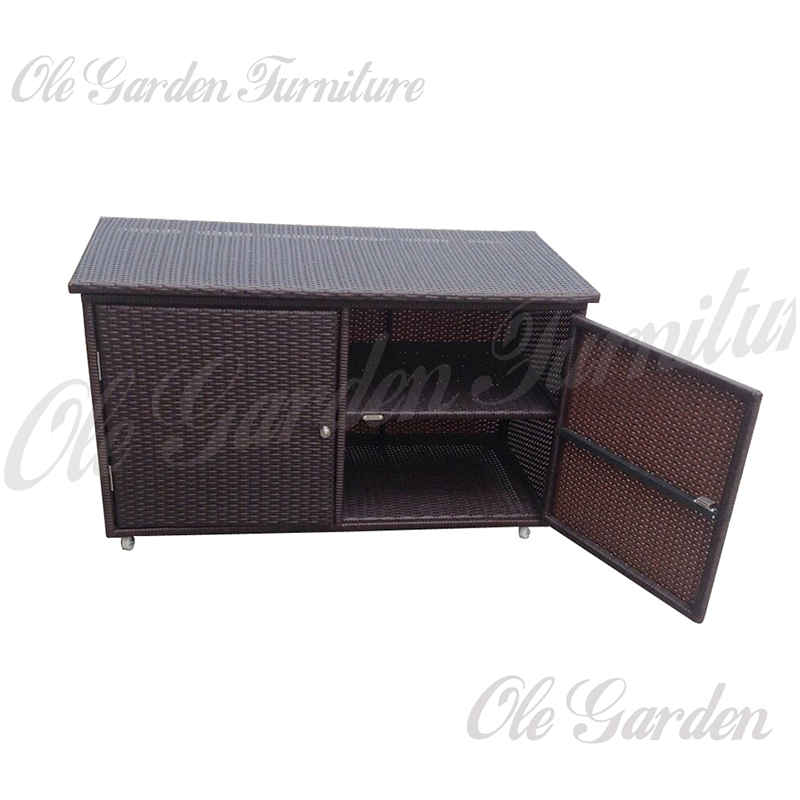 YL-820 Outdoor Patio Storage Container BoxA compact PE rattan storage box for balconies, courtyards, porches, or poolside areas, with a load-bearing top that doubles as a seat or small table.View Product →
Frequently Asked Questions
Can I put outdoor cushion covers in the washing machine?
Only if the care label says so. Close the zipper, turn the cover inside out, and wash it in cold water on the gentlest cycle inside a mesh bag. Never use a dryer, and never use fabric softener, which leaves a film that attracts dirt.
Is it safe to use bleach on outdoor cushions?
Some solution-dyed acrylics are labeled bleach-cleanable, and those can handle a diluted bleach solution for stubborn mildew. Everything else should be treated with mild soap and white vinegar. Bleach on an unlabeled fabric can strip the finish and yellow pale colors permanently.
How often should outdoor cushions be cleaned?
A light brush-down every two to four weeks during the season, a full wash at the start and end of it, and an immediate spot treatment for spills. In humid climates, add one extra wash in the middle of summer.
What is the fastest way to dry a soaked cushion?
Stand it on its longest edge in a shaded spot with good airflow and rotate it every couple of hours. If you need it faster, bring it indoors, lay it flat on a towel, and point a fan across the surface. Never use a tumble dryer.
Can I use a pressure washer on outdoor cushions?
No. Pressure washers force water deep into the foam core and fray the seams from the inside. A garden hose on a wide, gentle setting rinses just as effectively without doing structural damage.
How do I stop cushions from smelling musty?
Find the moisture and remove it. Airflow solves most musty smells, and undiluted white vinegar sprayed on the surface and left for thirty minutes kills the mildew that produces the odor. If the smell returns within a week, the foam core is colonized and needs replacing.