

 English
 中文简体
Content
- 1 The Short Answer: Ten to Fifty Years, and the Wood Gets Most of the Credit
- 2 Why Teak Outlasts Almost Every Other Timber
- 3 Five Things That Decide Whether You Get Ten Years or Forty
- 4 A Silver Grey Finish and Fine Cracks Are Not Damage
- 5 A Care Routine That Adds Decades Without Adding Work
- 6 If You Want the Long Life Without the Upkeep
- 7 What This Means When You Are Choosing
Teak has a reputation in outdoor furniture that borders on legend. Benches that outlive their owners, dining tables that shrug off a decade of monsoon rain, boat decks that spend their whole lives in salt spray — most of the stories are true. But the honest answer to how long teak furniture lasts outside is wider than most buyers expect. A well-made teak piece typically stays outdoors for ten to fifty years, and the gap between those two numbers comes down to three things: the grade of the timber, the climate it lives in, and the amount of attention it receives along the way.
The Short Answer: Ten to Fifty Years, and the Wood Gets Most of the Credit
Solid heartwood teak from mature, slow-grown trees, properly dried and well joined, will sit outside for decades with no protection at all. Cheaper teak — thin sections, sapwood mixed in, fast-grown plantation timber cut young — can start splitting, loosening and rotting inside ten years. Climate and care move the number up or down from there.
| Situation | Typical outdoor lifespan | What it looks like in practice |
|---|---|---|
| Mature, dense heartwood teak, cleaned and sealed | 25 to 50+ years | Frame stays tight; colour held with annual sealing |
| Good quality teak with minimal maintenance | 15 to 25 years | Surface turns silver grey; structure stays sound |
| Thin slats, mixed sapwood, weak joinery | 5 to 10 years | Loose joints, splitting and rot appear early |
| Feet in soil or standing in water | Reduced by years | Rot starts at the base and works upward |
| Coastal salt air with occasional rinsing | 15 to 30 years | Hardware usually fails before the timber does |
The range is not vague marketing. Two identical teak chairs bought on the same day can age very differently. The one under a covered patio, with air moving around it, will still be tight after twenty years, while the one in a lawn corner where water pools under the feet may need repair far sooner.
Why Teak Outlasts Almost Every Other Timber
It carries its own preservatives
Teak contains natural oils and extractives that make it resistant to rot, moisture and insects to a degree most hardwoods cannot match. That is why it became a boat-deck standard, and why an untreated teak table survives rain that would ruin unprotected softwood in a single season.
The grain is dense and stable
Slow-grown teak is dense, and dense timber moves less when humidity swings from wet to dry and back again. Less movement means smaller gaps at the joints, fewer cracks, and a frame that stays square through years of sun and rain.
Joinery decides whether the wood gets to grow old
A teak frame with weak joints will fail long before the timber does. Mortise-and-tenon joints, dowels and stainless steel fasteners are what let a piece reach its natural lifespan. When a teak table finally goes, it is almost always a screw, a glue line or a mild steel bolt that gave up first.
Five Things That Decide Whether You Get Ten Years or Forty
Before you judge teak by its label, look at these five factors. They matter more than the species name on the invoice.
- Climate and UV. Strong sun dries and bleaches the surface, humid tropical air encourages surface mould, and coastal salt is hard on fasteners and fittings.
- Water and drainage. Rot begins where water sits. Feet sunk into soil, slats that trap puddles and furniture standing in a wet corner shorten teak's life faster than anything else.
- The grade of the wood. Heartwood is durable; sapwood is not. Thin sections and mixed timber are the reason some teak sets look tired within a few seasons.
- Hardware and design. Stainless steel fasteners, raised feet, gaps that let air circulate, and breathable covers all buy years.
- Routine care. Occasional cleaning, prompt spill removal, and a sealer every six to twelve months if you want to keep the honey colour.
A Silver Grey Finish and Fine Cracks Are Not Damage
Untreated teak left outdoors turns from honey brown to a soft silver grey within a year or two. That is the surface layer weathering, not the timber failing, and sanding brings the original colour back if you prefer it.
Fine hairline cracks, often called checking, appear as the surface dries. They are normal in solid timber and do not affect strength. Mildew is also a surface problem on teak. Mild soapy water and a soft brush usually deal with it. Avoid pressure washing, which drives water into the grain and raises the surface texture.
A Care Routine That Adds Decades Without Adding Work
Teak maintenance has a reputation for being fussy. In practice, a handful of small habits do almost all of the work.
- Clean with mild soapy water and a soft brush, rinse, and let it dry. Once a month in humid seasons is plenty, and more often in salty coastal air.
- Handle spills when they happen. Wine, oil and food leave marks that set if they are ignored.
- Treat mould early, before it works into the grain.
- Decide on sealing early. If you want the honey-brown look, apply a teak sealer every six to twelve months. If silver grey suits your garden, skip it entirely.
- Tighten fasteners once a year, and check that no feet are sitting in standing water.
- Store cushions and covers out of the rain. Wet cushions are the most common reason outdoor seating starts to look tired, and a dry storage box keeps them ready for the next evening outside.
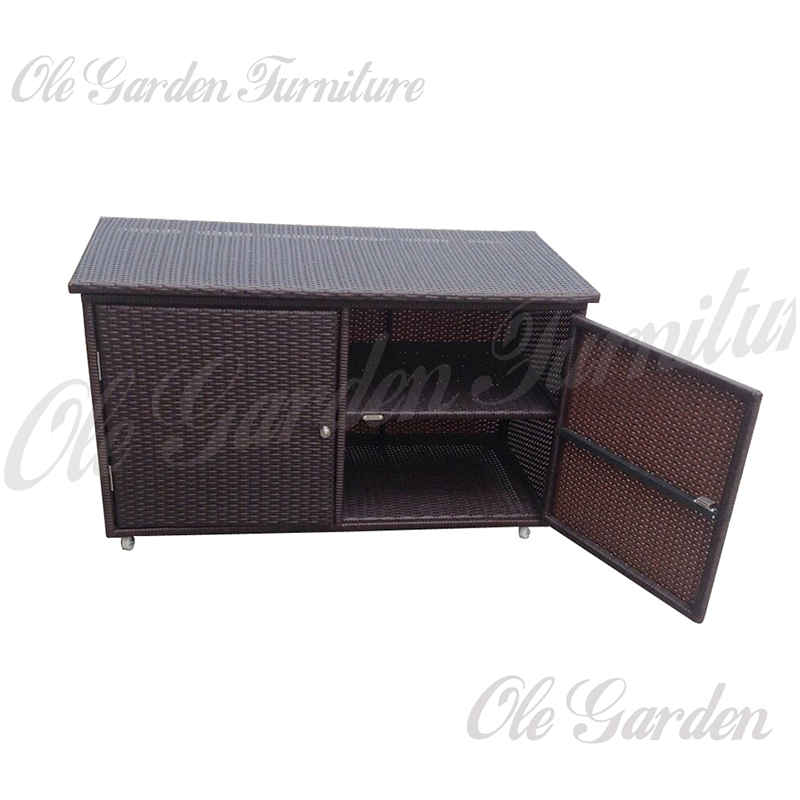 YL-820 Compact PE Rattan Outdoor Storage BoxFor small outdoor areas, this compact PE rattan storage box doubles as a seat or temporary coffee table and is easy to move.View Product →
Fabric care matters as much as timber care. Our guide to choosing and maintaining outdoor lounge chairs covers the frame and cushion details worth knowing.
None of this demands special products. It demands noticing the furniture once in a while, which is a fair trade for a piece that can stay outside for a generation.
If You Want the Long Life Without the Upkeep
Not everyone wants to oil furniture twice a year, and buyers in extreme climates often take a different route. Powder-coated aluminium frames, and woven resin finishes over aluminium, deliver a long outdoor life with almost no maintenance: a rinse with a hose, an occasional wipe, and that is the whole job. They do not grey or check, and modern weaving looks close enough to natural rattan that guests rarely notice the difference.
 ALSET 4144 VIVIENNE Aluminium 4-Piece Outdoor Sectional SofaBuilt for low-maintenance outdoor living, this four-piece aluminium sectional offers modular seating and removable, washable cushions for flexible patio arrangements.View Product →
| Material | Typical outdoor life | Upkeep |
|---|---|---|
| Solid heartwood teak | 25+ years | Seal or oil once or twice a year for colour |
| Powder-coated aluminium | 15 to 25 years | Rinse occasionally; no finish required |
| Woven resin over aluminium | 8 to 15 years | Hose down; check weave and ties each season |
| Powder-coated iron | 10 to 20 years | Touch up chips quickly to stop rust |
| Painted steel | 5 to 12 years | Repaint regularly; watch welds and feet |
The same logic applies to shade. A timber pergola in a wet climate needs refinishing every year or two, while an aluminium louvered pergola with adjustable blades simply drains and dries, letting you angle the roof for sun or rain without any wood to feed.
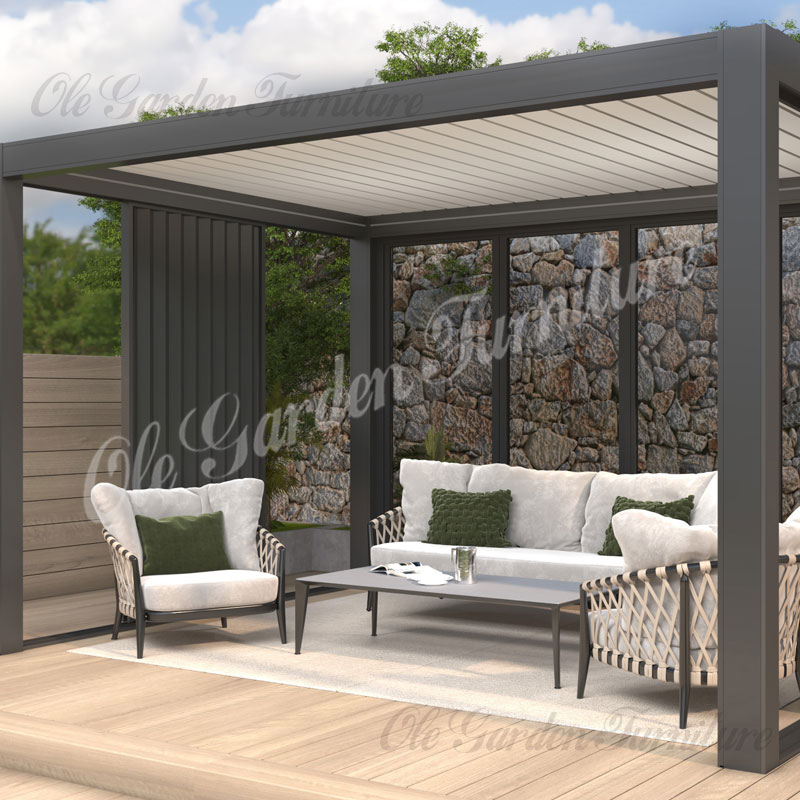 LUCAS GOL-44110 Electric Louvered All-Weather Outdoor PergolaAdjustable electric louvers control sunlight and airflow, while weather-resistant construction suits courtyards, gardens, and terraces.View Product →
What This Means When You Are Choosing
If you love the look and are willing to do the small amount of upkeep, teak remains one of the best outdoor materials money can buy, and a good set can genuinely outlast its owners. If you would rather spend your weekends sitting on the furniture than maintaining it, choose a material engineered for low maintenance and check the details that matter: frame thickness, coating quality, joint construction, and replaceable cushions.
Teak is not one of the materials we build in. Our own outdoor collections are produced in powder-coated aluminium, iron and woven finishes, and a large share of what we make is custom — designed by our customers and manufactured to their specifications for gardens, terraces and larger outdoor projects. If you would like to see how we approach furniture that is built to stay outside, take a look at our outdoor furniture range.
However you furnish your outdoor space, the deciding factor is rarely the name of the timber. It is whether the piece was built to live outdoors in the first place, and whether anyone plans to look after it.